
Are Heart Attacks Preventable with Chelation Therapy?
Heart disease is the #1 killer in the U.S., yet the lining of your arteries is almost never checked. How we assess it, and what the research says about EDTA chelation.

Hot take: though cardiovascular disease (CVD) is the #1 killer in the United States, screening and prevention usually fail to capitalize on basic cardiovascular knowledge.1
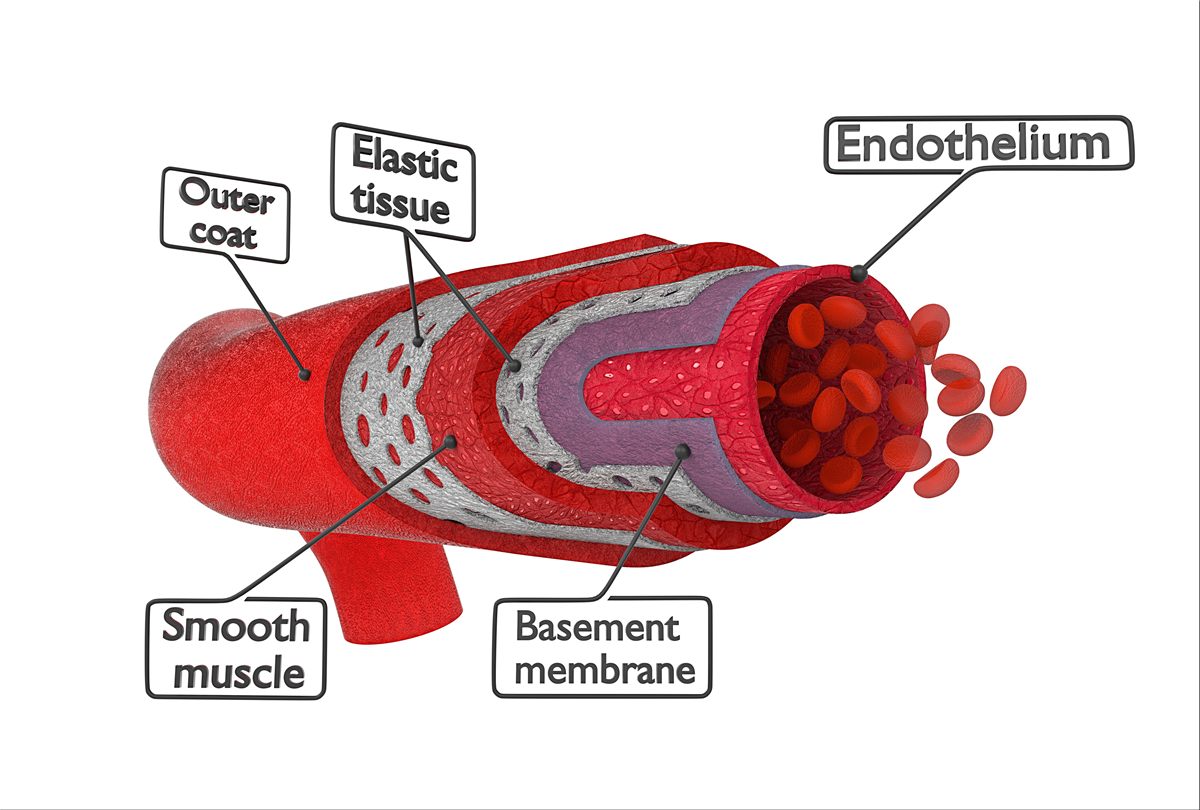
Physicians know that endothelial dysfunction leads to the formation of cholesterol plaques, the beginning of CVD, but no assessment of the endothelium is typically ever done. That’s a big problem. Knowing how your endothelium is functioning gives meaningful insight that can motivate both provider and patient to work together to lower the overall risk of a cardiovascular event.
Current therapy
Standard care for heart health involves seeing your primary care physician and checking blood pressure, BMI and cholesterol. Then a decision about medication is made, therapeutic lifestyle changes may be addressed, and a stress test with a cardiologist might be discussed. Patients are rarely given a CVD risk score, and not all patients can or will do a stress test. But when over 50% of men and 64% of women who die suddenly of coronary heart disease had no previous symptoms, we need to step up our game and make endothelium assessment routine.2
How we make it routine
gerstenberg.clinic assesses overall cardiovascular health using the tools in a HeartSmart exam. Among them, the Max Pulse or CV Profilor device measures the elasticity, or “stretch,” of the arteries with a noninvasive probe. Low arterial elasticity means endothelial dysfunction and a risk of developing (or already having) arterial plaque.
But that’s not the only way we watch out for the endothelium.
Protecting the endothelium with chelation therapy
Antioxidants are well known for reducing the risk of cardiovascular disease, because oxidation causes dysfunction of the endothelium. Most of the time you hear about antioxidants in foods (a great source!). Ethylenediaminetetraacetic acid (EDTA) chelation therapy also has powerful antioxidant properties.3
A March 2022 systematic review in the Journal of the American Heart Association showed some benefit to preventing disease with chelation therapy, with no reported harm.4 Numerous earlier articles reporting cardiovascular benefit prompted that review. There were even discussions at the AHA about whether, or how, to put IV chelation into treatment algorithms. It was voted down in favor of more research and more profitable therapies (in my estimation, because of the influence of big pharma).
A short history of chelation
From a 2015 review on the topic:5
Chelation therapy was first used in the early 20th century to treat metal poisoning. The treatment involves administering a drug called a chelator, which has a magnetically charged pocket that can “grab” a metal and hang on to it, allowing it to be excreted in the urine—kind of like a baseball mitt with a magnet in its pocket. One chelator, calcium EDTA, is FDA approved to treat lead poisoning. Alternative medicine practitioners have been using a similar chelator, disodium EDTA, to treat heart disease, claiming to see benefits, since the 1950s.
[To treat known disease]… EDTA chelation therapy is usually administered intravenously each week for 20 to 40 sessions. Each intravenous infusion may last hours. In spite of the expense and tedium, the 2008 National Health Statistics Report stated that in 2007, 111,000 people used chelation.
The TACT trial
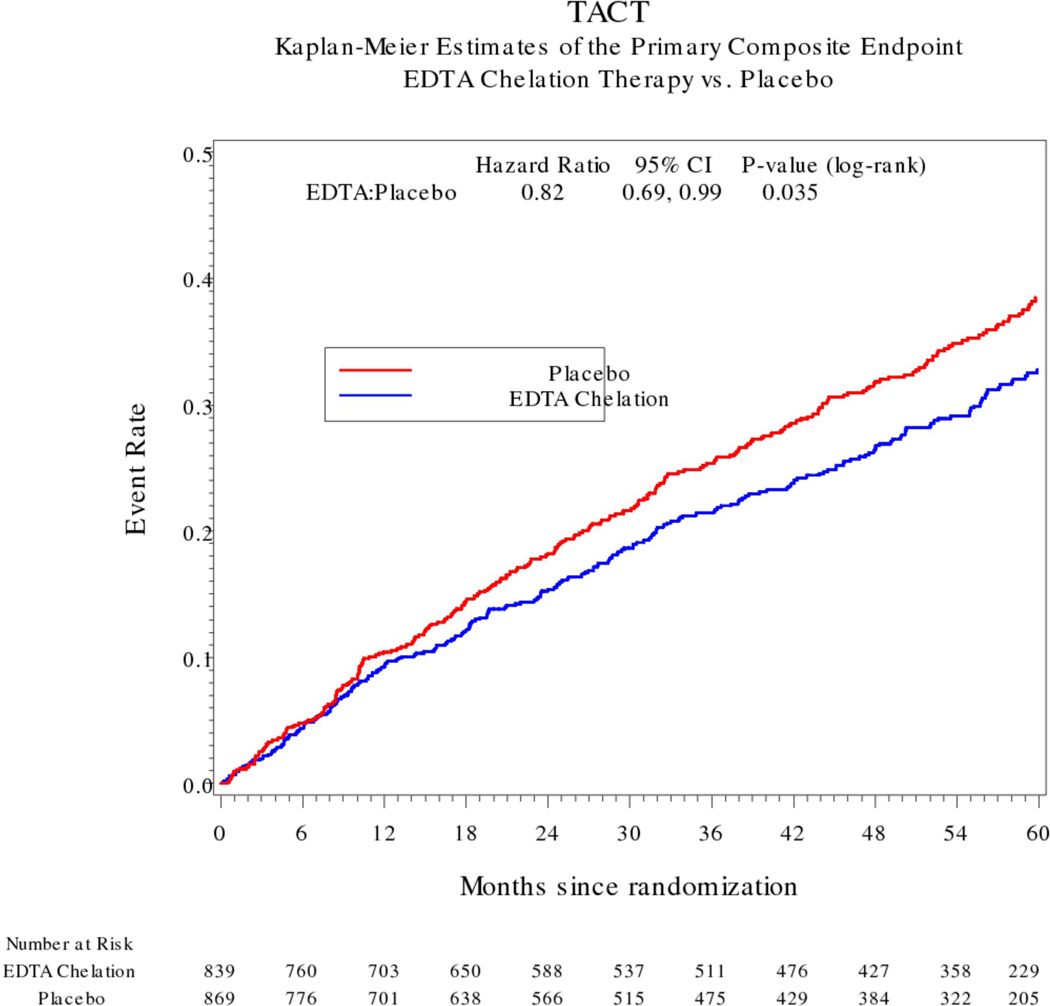
In the early 2000s, the large Trial to Assess Chelation Therapy (TACT) enrolled 1,708 patients who had already had a heart attack, and so were at higher risk of another, to settle whether chelation offers a cardiovascular benefit: reversing cholesterol plaque and preventing events like heart attacks and strokes.6 Results showed an 18% reduction in second events in patients who had had a prior heart attack, as shown below.
The bottom line
If you consider your cardiovascular health at risk and want to be proactive, monthly IV EDTA chelation is worth a sincere conversation with your provider. See our IV infusions page to learn more about chelation and what to expect.
References
- CDC, Heart Disease Facts.
- American Heart Association. Heart Disease and Stroke Statistics—2012 Update. Circulation.
- González-Cuevas J, et al. Ethylenediaminetetraacetic acid induces antioxidant and anti-inflammatory activities in experimental liver fibrosis. Redox Rep. 2011;16(2):62–70. doi.
- Ravalli F, et al. Chelation Therapy in Patients With Cardiovascular Disease: A Systematic Review. J Am Heart Assoc. 2022;11:e024648. doi.
- Lamas GA. Chelation therapy: a new look at an old treatment for heart disease, particularly in diabetics. Circulation. 2015;131(21):e505–6. PMC4448121.
- Lamas GA, et al.; TACT Investigators. Effect of disodium EDTA chelation regimen on cardiovascular events in patients with previous myocardial infarction: the TACT randomized trial. JAMA. 2013;309(12):1241–50. PMID 23532240.